

Rendering Scenario Fiction
A new genre of Institutional Futurism


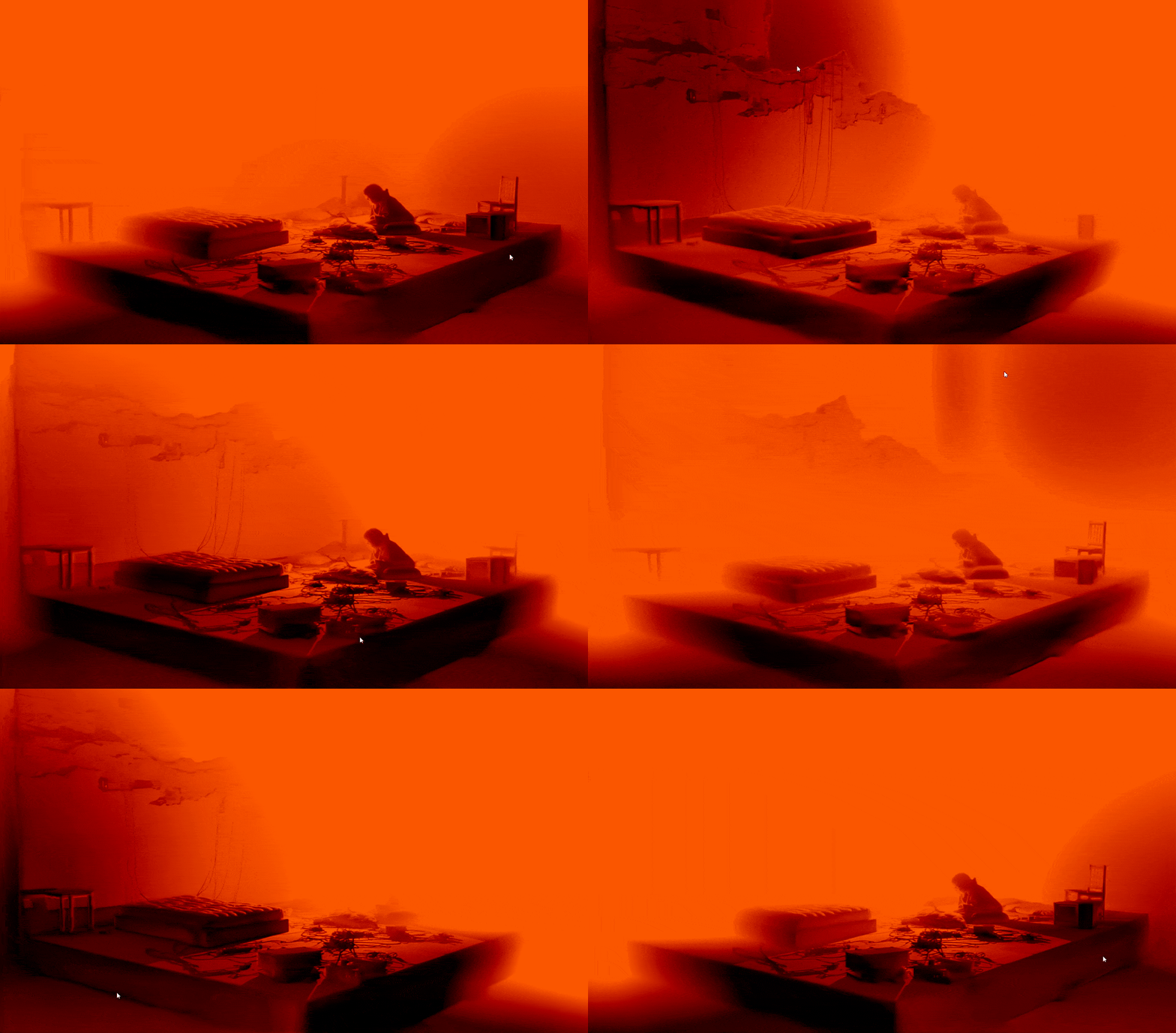
Antikythera’s Hemispherical Stacks Research Unit explores the geopolitics and multipolarization of planetary computation. Witnessing the ongoing fragmentation of computational networks into a handful of transnational geopolitical blocs —Hemispherical Stacks—, we set out to imagine the irregular and sometimes antagonistic consolidations, federations and geopolitical alliances which may result from this development, as well as the latent possibilities within this alternative “base-infrastructural-unit” of governance.
To work creatively through these topics, we borrow from and blur the legacies of ‘scenario planning’ and ‘science fiction’ to define a new genre of institutional futurism we call “Scenario Fiction” (developed across Antikythera studios and elsewhere). Unlike ‘scenario planning’ —a strategic tool employed by traditional think tanks to support anticipatory decision-making and mitigate disruption— Scenario Fiction helps articulate key ideas about the present to orient and direct alternative futures into existence. Unlike ‘science fiction’ and its many sub-genres predicated on plot- or protagonist-driven storytelling, Scenario Fiction intentionally de-personalizes the future and shifts the spotlight on speculative cause-effect chains, structural dynamics, and infrastructural trophic cascades. As a framework for Hemispherical Stacks, Scenario Fiction allows us to extrapolate near-future geopolitical tensions and technological developments in order to accurately capture and frame counterintuitive aspects of the present. This approach has led to an initial series of contributions by various authors recently published in the Antikythera Journal with MIT Press.
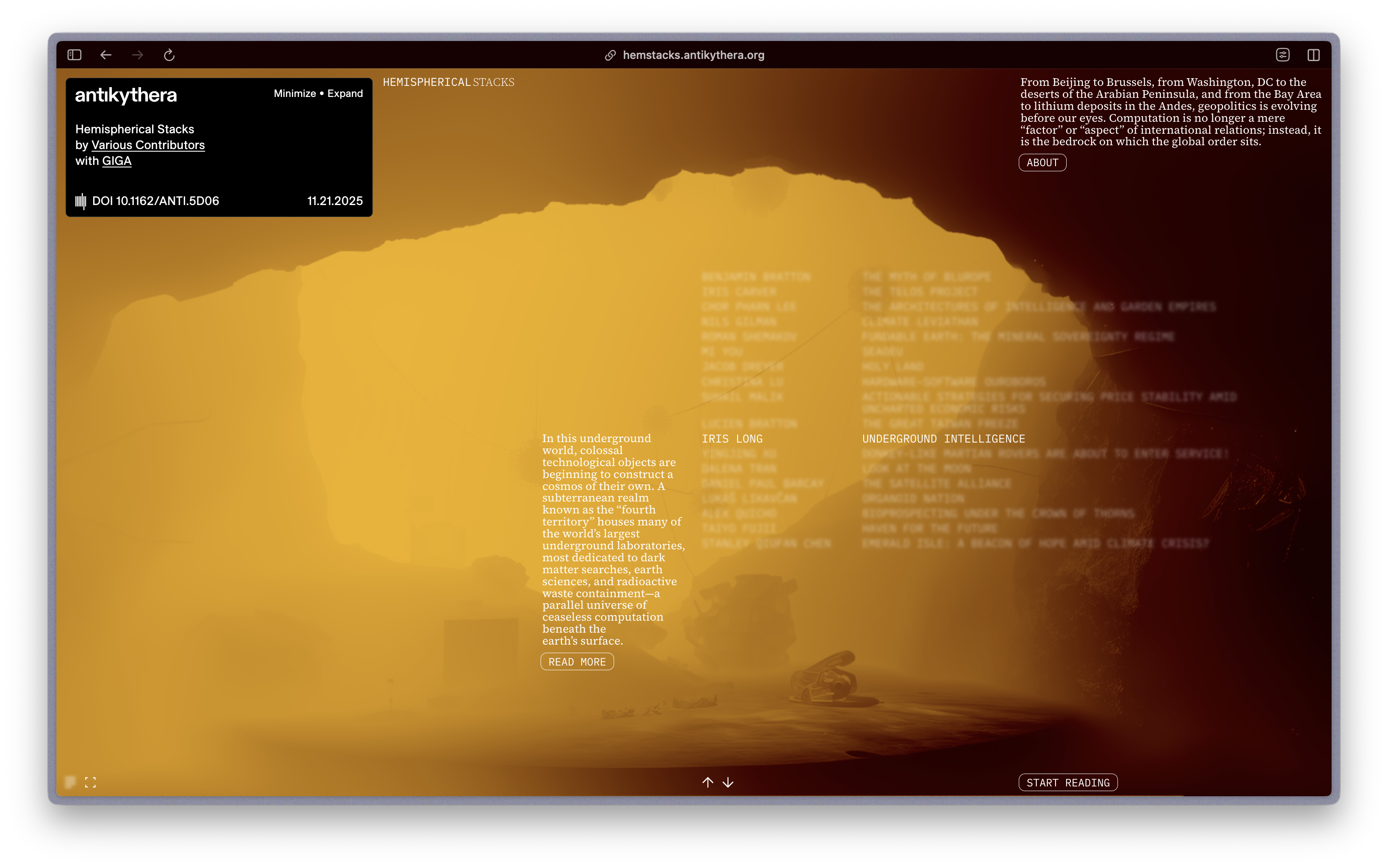
As designers, how do we render Scenario Fiction, both figuratively and literally? How can we visually communicate this new genre both as a concept and as a format?
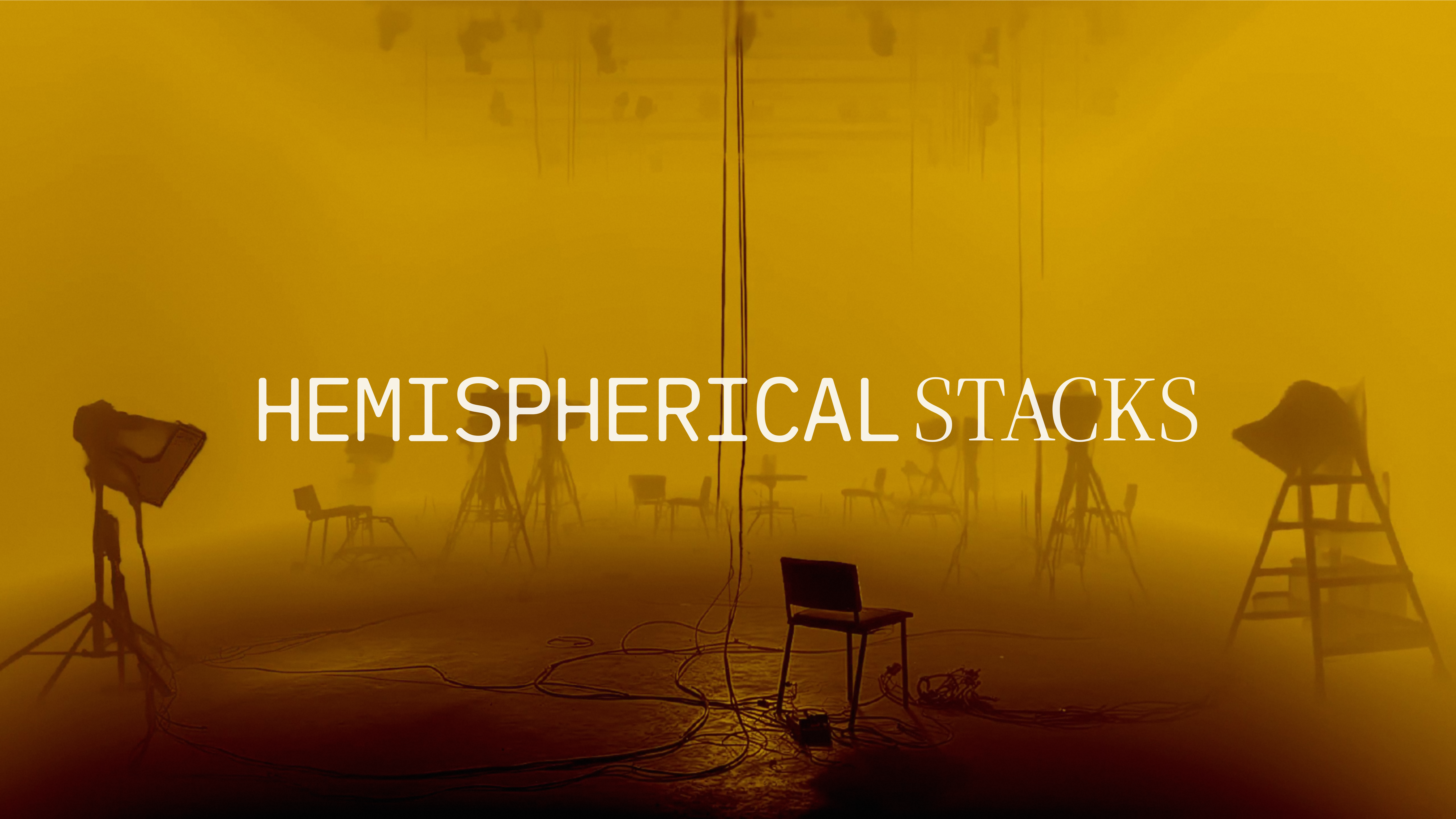
Instinctively, we opted to illustrate scenarios via highly “synthetic” imagery, in the dual sense of leaning into their apparent generated “artificiality” but also in terms of their combinatory “synthesis” of visual elements across scenarios which collapses the self-contained representation of each work and unifies all contributions in one continuous stream greater than the sum of its parts. We also avoided centring any “main characters” or humanoid figures within the stream, staging instead composite landscapes, environments and interiors foregrounded as figures in themselves rather than as backdrops for any additional, protagonist-driven narrative overlay.
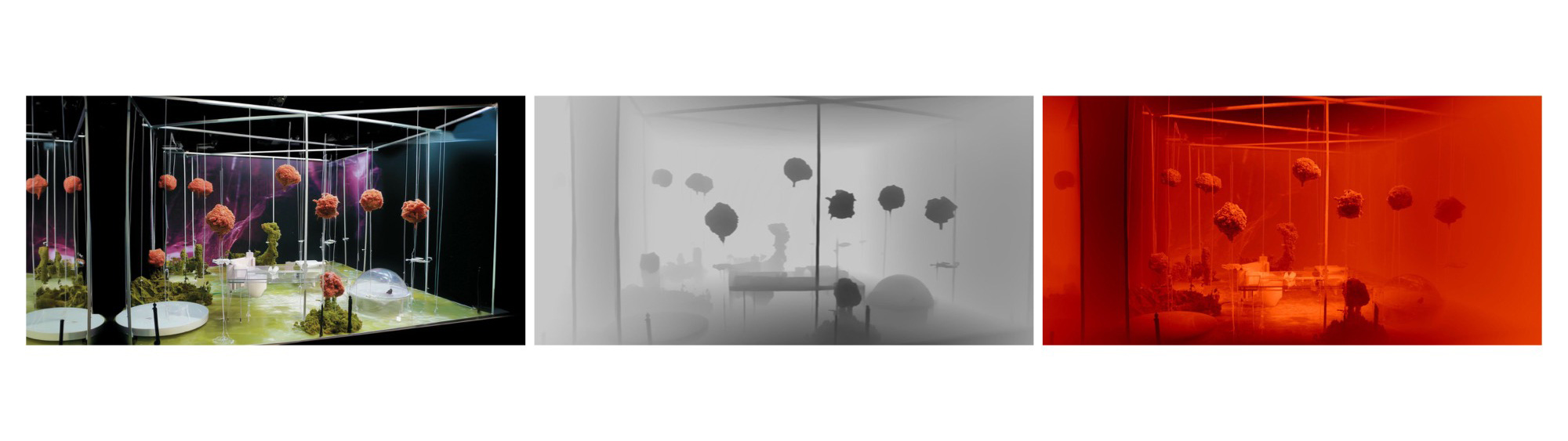
Working with Milan-based collaborators Giga (with whom we also recently built a recursive algorithmic storytelling engine featured in ”The Next Earth” exhibition at the last Venice Architectural Biennale), we pushed the concept further to develop a bespoke image rendering pipeline and so-called “thick fog” interactive element layered onto the identity of the project. As such, a custom parametric shader was designed to simulate image depth, illuminated by a moving light source which follows the cursor as users navigate the otherwise flat digital surface.
By mapping luminance data and depth information into the color channels of generated images, our script reconstructs a simulated three-dimensional space where every pixel is given a 3D position. The mouse position is also mapped in this space and linked to a soft spotlight that controls the intensity / spread of the light across the scenes, behaving much like a virtual torch moving in front of the images. From this reconstructed space, the shader computes the distance between each pixel and the light source to simulate realistic light falloff: pixels closer to the mouse receive more illumination, while distant pixels gradually fade into darkness and fog. The last step of the pipeline adds a distinct color tint through a linear burn blend mode, differentiating the images while also facilitating their inclusion within a unified set.
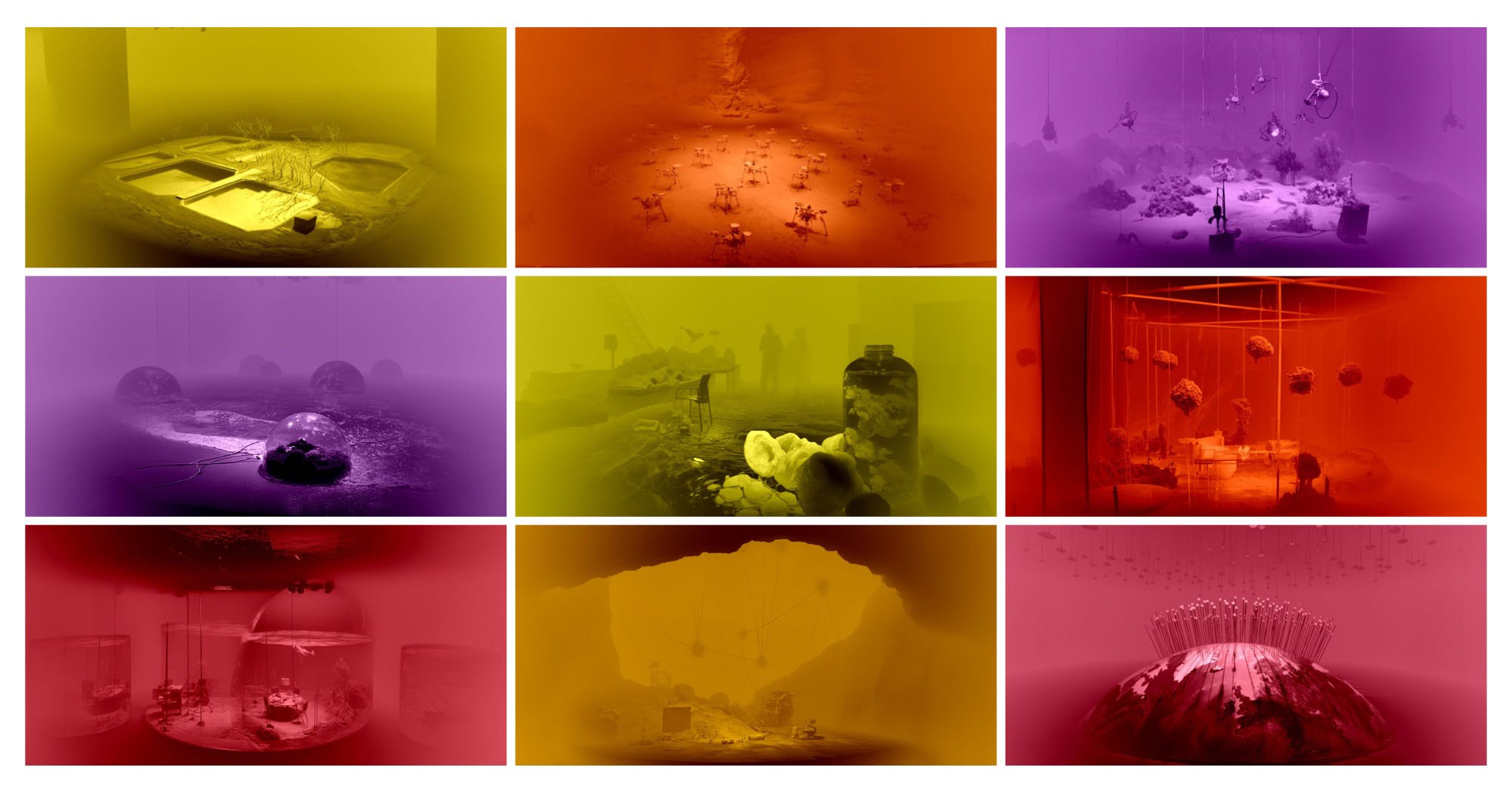
The design and invitation to engage with this bespoke alternative file format (.fog?) was ultimately the appropriate response to the Scenario Fiction brief. Physically navigating and “carving through” the screen to heighten or obfuscate the legibility of each composite scene presents the images as open-ended sites for exploration rather than display surfaces, and therefore reveals the scenarios as provocations rather than prescriptions; they don’t chart optimal utopian or dystopian futures, but rather illuminate the counterintuitive logics embedded in choices made today. Throughout antikythera’s research initiatives, to discover and compose this new interpretative vocabulary is the experimental design project in itself.
Nicolay Boyadjiev is the Design Director of Antikythera.
Hemispherical Stacks is an ever-growing series of contributions periodically published in the Antikythera Digital Journal, leading to an upcoming book as part of Antikythera’s Book Series with MIT Press.